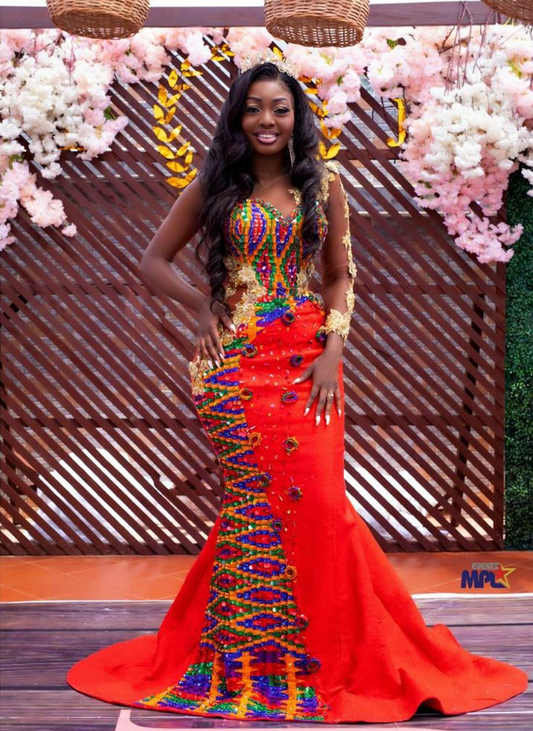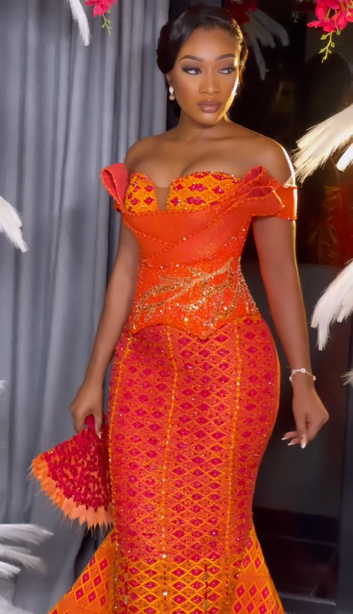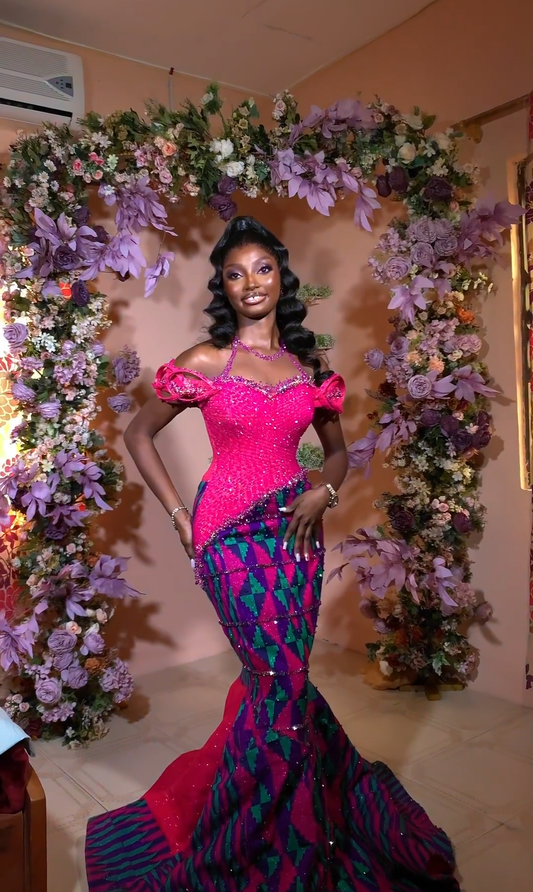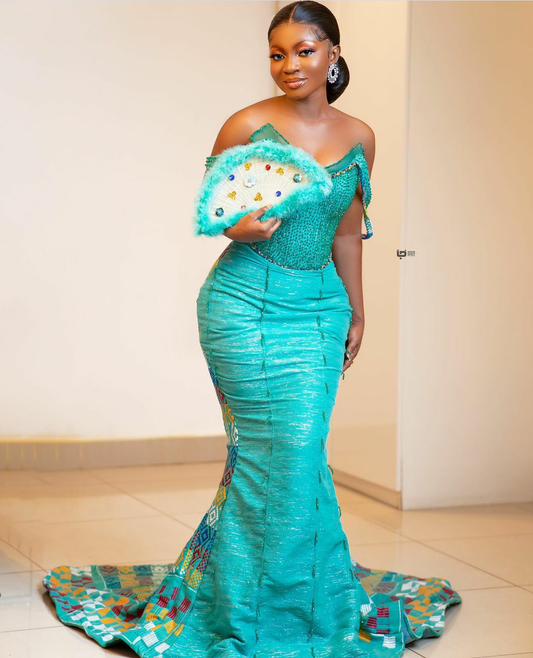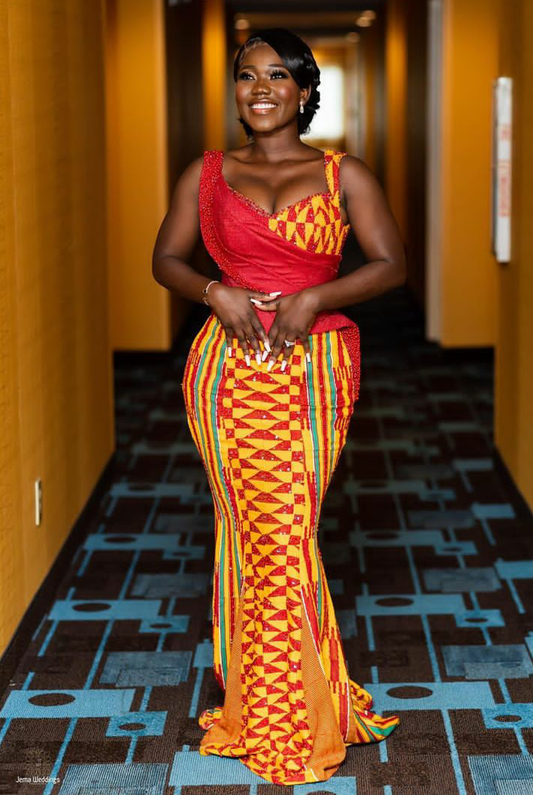

Every kente cloth begins as thread. Long before it is draped over a bride's shoulder or laid across a groom's chest, it is a bundle of coloured yarn, a wooden loom, and a weaver in Kumasi who knows exactly what his hands are doing. Nothing about real kente is rushed, and nothing about it is printed. It is built, thread by thread, strip by strip, until the cloth tells a story.
Here is how it happens — from the first thread to the finished cloth.
The Loom: A Weaving Frame Built by Hand
The kente loom is a wooden frame, built by the weaver himself or by a local carpenter. It sits low, and the weaver works it sitting down, using his hands and feet together. One hand throws the shuttle carrying the weft thread across the warp threads, while his feet work the pedals that lift and lower the warp, opening a gap for the shuttle to pass through.
It is not a machine. There is no button to press, no pattern loaded from a computer. The weaver holds the design in his head, learned over years of sitting beside a master weaver and watching. That is why no two hand-woven cloths are ever exactly alike — each one carries the hand of the person who made it.
Preparing the Thread
Before weaving starts, the thread has to be prepared. The weaver chooses the colours for the cloth — gold for royalty, red for sacrifice, green for growth, blue for peace, black for maturity, white for purity — and winds the yarn onto bobbins. The warp threads, the long threads that run the length of the cloth, are measured out and stretched across the loom. This part alone takes patience: a mistake in the warp shows up in every inch of the finished strip.
Good thread matters. Real kente is woven from quality yarn, and the colours are chosen with meaning, not at random. If you want to know what each colour says, our guide to what your kente colours mean walks through every shade and when to wear it.
Weaving the Strips
Kente is not woven in one wide piece. It is woven in narrow strips, usually about four inches wide, and each strip is woven separately on the loom. The weaver passes the shuttle back and forth, building the pattern row by row. Simple stripes come quickly; complex patterns — the ones that carry proverbs and names — take far longer, because the weaver has to change colours and lift different warp threads for every single row.
This is where the pattern is born. Fawohodie, the symbol of independence, is woven into the cloth as a motif, not printed on top. Nkyinkyim, the twisting pattern that speaks of initiative and dynamism, takes shape as the weaver twists the weft around the warp. Adweneasa — "my skill is exhausted" — is the weaver's masterpiece, a pattern so demanding that only a master weaver attempts it. Our guide to what your kente pattern says explains five of these patterns and the proverbs behind them.
Joining the Strips into a Cloth
When enough strips are woven, they are sewn together, edge to edge, to make a full cloth. The seams are stitched by hand so carefully that from the front, the joins all but disappear — the pattern flows across the cloth as if it had been woven in one piece. A full cloth for a wedding or a special occasion can take many strips, and the joining is itself a skill: the strips have to line up, the patterns have to meet, and the finished cloth has to hang evenly.
That hand-joined finish is one of the easiest ways to recognise the real thing. Turn a cloth over and look at the back — on genuine hand-woven kente, you can see the weave and the seams where the strips were joined. A printed imitation is flat and smooth on both sides, because the pattern was never woven at all.
Why It Takes Four to Six Weeks
A single cloth can take weeks of work. The warp has to be prepared, each strip woven by hand, the strips joined, and the finished cloth checked and pressed. A weaver working full days might finish one strip a day — and a full cloth needs many.
That is why every cloth from MG Kente is made to order, and why we ask you to allow four to six weeks for your cloth to be woven. It is not a delay. It is the time the work actually takes, and it is the reason your cloth arrives as something no one else owns — woven for you, in the colours and pattern you chose, by a weaver in Kumasi.
The Weaver's Knowledge
Kente weaving is knowledge passed from hand to hand. In Kumasi and the weaving town of Bonwire, boys learn at the loom beside their fathers and uncles, starting with simple stripes and working up to the named patterns over years. The names, the proverbs, the meanings of the colours — all of it is carried in the weavers themselves.
When you buy a hand-woven cloth, you are not only buying fabric. You are keeping that knowledge alive: the loom, the hand, and the stories woven into every strip.
Marrying Ghana Kente is dedicated to ensuring you have a fabulous Ghana and African wedding experience. We provide the best quality Kente for brides and grooms, Senator wears and luxurious wedding accessories. Shop now at mgkente.com — use code NAZ26 for 10% off. Every cloth is hand-woven to order in Kumasi, Ghana, with free worldwide shipping.
Explore Marrying Ghana
Marrying Ghana News on YouTube — daily world news, Burkina Faso Today, breaking news and kente stories on video. Subscribe there for news updates.
Marrying Ghana Inc. is our main company site, where you can explore authentic kente cloth and Ghana fashion, read about the kente factory we are building and the investment opportunities around it, and see the community work we support in Ghana.
MG Kente is the shop, where you can buy authentic hand-woven royal kente cloth, wedding dresses, cloth and agbada, made in Kumasi, Ghana, with free worldwide shipping. Every piece is woven to order for you — please allow 4 to 6 weeks for your cloth to be made.
Marrying Ghana Dating is our free dating platform connecting people around the world, rooted in Ghanaian culture — coming soon, so keep an eye out for the launch.